“`html
Mastering Health Journalism: 11 Essential Tips to Improve Your Health News
In an era defined by the rapid spread of information, the quality of health news has never been more critical. With millions of people turning to the internet for medical advice, the responsibility of journalists, bloggers, and health communicators is immense. Delivering accurate, engaging, and trustworthy health content is not just about getting clicks; it is about public safety and health literacy.
However, medical reporting is complex. Bridging the gap between dense scientific data and the general public requires a specific skill set. Whether you are a seasoned medical reporter or a digital content creator, these 11 essential tips will help you improve your health news, build authority, and ensure your audience receives the high-quality information they deserve.
1. Prioritize Peer-Reviewed Sources
The foundation of any credible health news story is its source. To improve the reliability of your reporting, always prioritize studies published in reputable, peer-reviewed journals such as The Lancet, The Journal of the American Medical Association (JAMA), or The New England Journal of Medicine.
- Avoid “Science by Press Release”: Never rely solely on a company’s press release. These are often marketing tools designed to highlight positive results while glossing over limitations.
- Verify the Journal’s Impact: Use tools like PubMed to ensure the study is indexed in a recognized medical database.
2. Distinguish Between Correlation and Causation
One of the most common pitfalls in health reporting is confusing correlation with causation. Just because two things happen at the same time does not mean one caused the other. For example, a study might find that people who drink green tea live longer, but that doesn’t mean green tea is the direct cause—it could be that green tea drinkers also exercise more or smoke less.
To improve your health news, be explicit about what a study proves. Use cautious language like “associated with” or “linked to” rather than “causes” or “cures,” unless a rigorous clinical trial has proven a direct causal link.
3. Humanize the Data with Expert Interviews
Data can be dry, but human expertise brings it to life. To add depth and authority to your health news, always interview subject matter experts (SMEs) who were not involved in the study you are reporting on.
An independent expert can provide essential context, explain the nuances of the findings, and point out potential conflicts of interest. This practice aligns with Google’s E-E-A-T (Experience, Expertise, Authoritativeness, and Trustworthiness) guidelines, which are crucial for ranking health-related content.
4. De-jargonize the Content for Health Literacy
Health literacy is the ability of individuals to find, understand, and use information to inform health-related decisions. If your news is filled with “cardiovascular morbidity” and “asymptomatic pathologies,” you will lose your audience. To improve your health news, translate medical jargon into plain language.
- Instead of “hypertension,” use “high blood pressure.”
- Instead of “myocardial infarction,” use “heart attack.”
- Instead of “adipose tissue,” use “body fat.”
Your goal is to make science accessible without “dumbing it down.” Aim for a reading level that an average high school student can comfortably understand.
5. Be Transparent About Study Limitations
No study is perfect. Improving your health news means being honest about the limitations of the research you are covering. Readers deserve to know the scope of the science so they can manage their expectations.
Key questions to address:
- Was it an animal study or a human trial? Results in mice often do not translate to humans.
- What was the sample size? A study of 10 people is far less significant than a study of 10,000.
- Who funded the research? Transparency regarding industry funding (e.g., a sugar study funded by a soda company) is vital for maintaining trust.
6. Avoid Sensationalism and “Miracle” Headlines
Clickbait is the enemy of quality health journalism. While “This One Vegetable Cures Cancer” might get clicks, it destroys your credibility and can lead to dangerous health choices for your readers. Medical progress is usually incremental, not revolutionary.
Improve your health news by writing headlines that are accurate and measured. If a study shows a “statistically significant” improvement, don’t report it as a “total breakthrough.” Focus on the long-term implications rather than the short-term shock value.
7. Use Visuals to Explain Complex Concepts
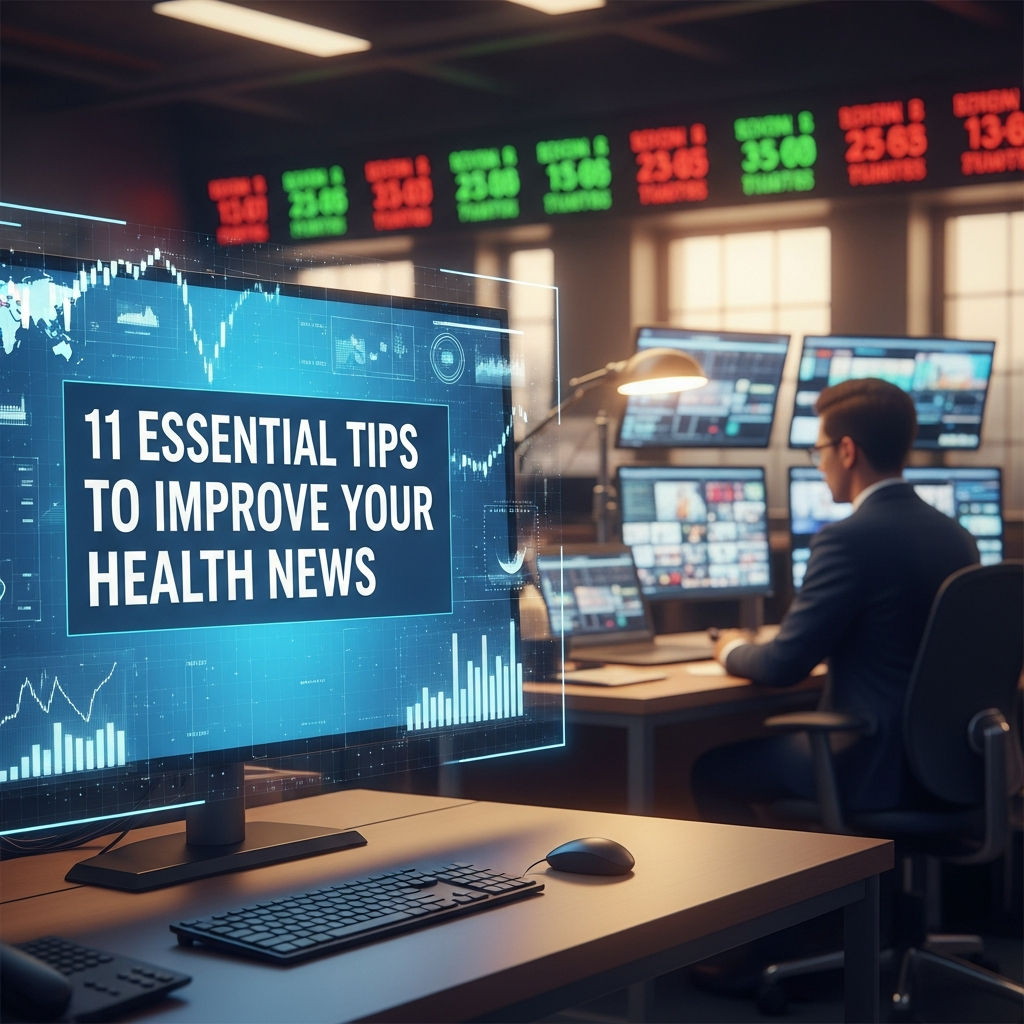
Health information is often visual. Use charts, infographics, and videos to help explain how a new medication works or how a virus spreads. Visual aids help break up long blocks of text and improve retention for your readers.
Ensure that your visuals are accurately labeled and sourced. A well-designed infographic can be shared across social media, increasing the reach of your health news while maintaining its educational value.
8. Address the “So What?” Factor
Every piece of health news should answer one fundamental question for the reader: How does this affect me? If you are reporting on a new clinical guideline for diabetes, explain what it means for someone currently living with the condition.
Provide actionable takeaways. If a study suggests that lack of sleep increases the risk of Alzheimer’s, include a sidebar with “5 Tips for Better Sleep Hygiene.” This makes your content practical and valuable.
9. Check and Re-Check Your Numbers
Numerical errors can lead to serious health misinformation. When reporting on risks, distinguish between absolute risk and relative risk. For example, saying a drug “doubles the risk” of a side effect (relative risk) sounds terrifying, but if the original risk was 1 in 1,000,000 and it is now 2 in 1,000,000 (absolute risk), the actual danger remains very low.
Always double-check percentages, dosages, and dates. A single misplaced decimal point in a health news story can have dire consequences.
10. Keep Content Updated and Relevant
Science is a self-correcting process. What was considered “best practice” five years ago may be outdated today. One of the best ways to improve your health news platform is to perform regular content audits. If you have an article about a specific treatment, update it when new clinical trials are released or if the FDA issues new warnings.
Updating your content not only serves your readers but also signals to search engines that your site is a current and reliable source of information, boosting your SEO rankings.
11. Master SEO for “Your Money Your Life” (YMYL) Content
Google treats health news as “YMYL” content—topics that could significantly impact a person’s happiness, health, financial stability, or safety. Because of this, health sites are held to a higher standard of quality.
To improve your health news SEO:
- Author Bylines: Include clear author bios that highlight the writer’s credentials.
- Fact-Checking: State clearly that the article has been medically reviewed by a professional.
- Citations: Use outbound links to authoritative sites like the CDC, WHO, or NIH.
- User Intent: Focus on answering the specific questions users are typing into search engines.
Conclusion: Building a Healthier Information Ecosystem
Improving your health news is a continuous journey of learning and refinement. By moving away from sensationalism and toward evidence-based, transparent, and accessible reporting, you contribute to a better-informed public. In the world of health news, accuracy is the ultimate currency. When you prioritize the well-being of your readers over the speed of your publishing, you build a lasting reputation as a trusted voice in the medical community.
Implement these 11 tips today to elevate your reporting, engage your audience, and provide the clarity that is so desperately needed in today’s complex health landscape.
“`