How to Master Health News in 47 Days: A Step-by-Step Guide to Scientific Literacy
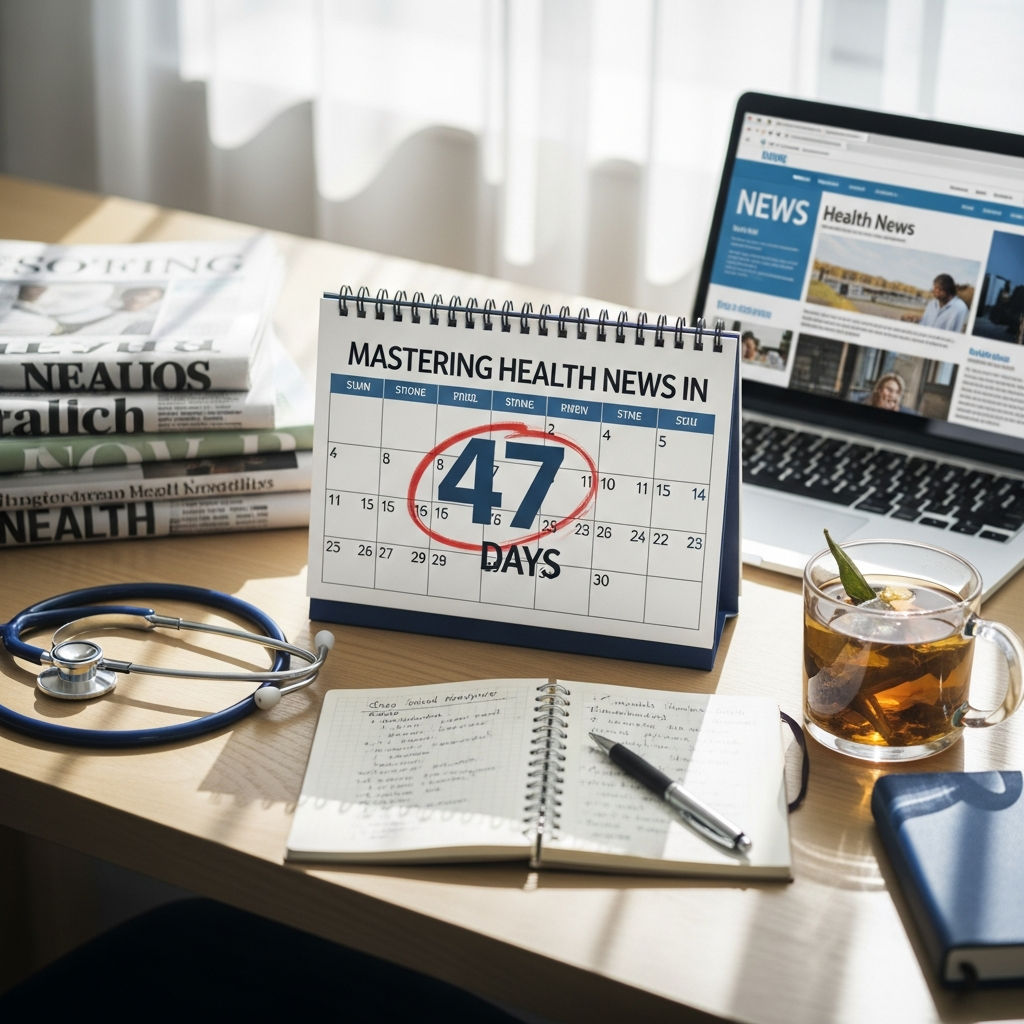
In an era of viral social media posts and sensationalized headlines, the ability to navigate health news is no longer just a hobby—it is a vital survival skill. Every day, we are bombarded with conflicting information: one study claims coffee is a miracle elixir, while another suggests it might be detrimental to heart health. How do you separate the breakthrough science from the clickbait? Most people spend years trying to figure this out, but with a structured approach, you can master the art of health news literacy in exactly 47 days.
Mastering health news means moving beyond the headline. It requires understanding the hierarchy of evidence, recognizing the bias in health journalism, and knowing where to find the original source material. This guide breaks down the 47-day journey into actionable phases that will transform you from a passive consumer into a critical health analyst.
Phase 1: Deconstructing the Headline (Days 1–10)
The first ten days are about unlearning your current consumption habits. Most health news readers never make it past the headline, which is often written by editors—not the researchers—to maximize clicks. Your goal in this phase is to develop a “skeptic’s lens.”
Understanding Correlation vs. Causation
The most common trap in health news is the confusion between correlation and causation. If a study finds that people who drink green tea live longer, it doesn’t necessarily mean the tea is the cause. It might be that green tea drinkers also exercise more or smoke less. During these first few days, practice looking for these “confounding variables” in every article you read.
The Anatomy of Clickbait
In Phase 1, you should also learn to identify red-flag words. Be wary of headlines that include phrases like:
- “Miracle Cure”
- “Everything you knew about [X] is wrong”
- “Doctors are stunned”
- “Secret hack to lose weight”
Science is incremental; it rarely happens in “miracles” or “shocks.” If a headline sounds too good to be true, it almost certainly is.
Phase 2: The Hierarchy of Evidence (Days 11–25)
To master health news, you must understand that not all studies are created equal. In this two-week deep dive, you will learn to categorize research based on its reliability.
Animal Studies vs. Human Trials
Many “breakthroughs” reported in the media are actually based on studies conducted on mice or in petri dishes (in vitro). While these are essential for early-stage science, they rarely translate directly to human health. When you see a health claim, your first question should be: “Was this tested on humans?”
The Gold Standard: Randomized Controlled Trials (RCTs)
By day 20, you should be able to identify an RCT. This is the gold standard of clinical research, where participants are randomly assigned to either a treatment group or a control group. This method minimizes bias and provides the strongest evidence for whether a specific intervention actually works.
Observational Studies and Their Limits
Much of nutritional news is based on observational studies, where researchers track what people eat over years. While useful for finding patterns, these studies cannot prove cause and effect. Learning to distinguish these from RCTs is a hallmark of a health news master.
Phase 3: Sourcing the Source (Days 26–35)
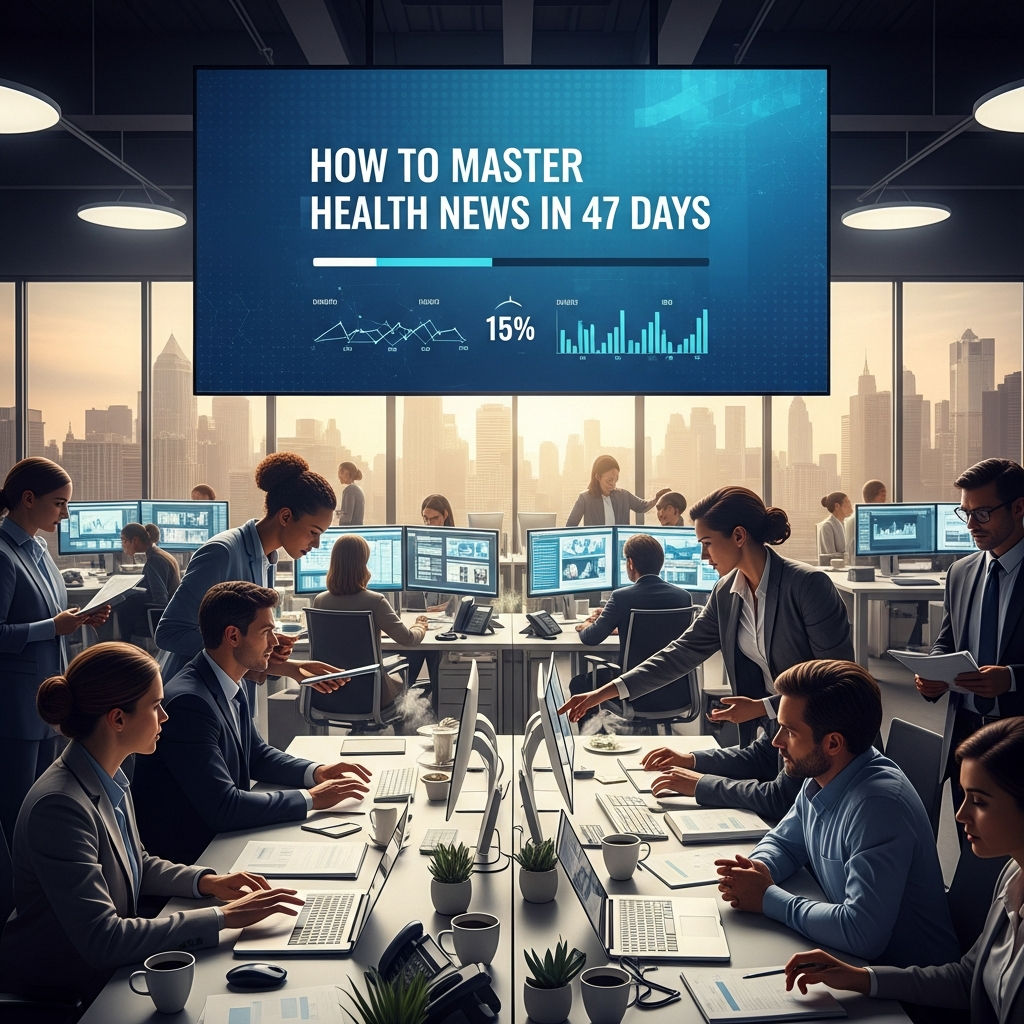
By day 26, you are ready to stop relying on secondary news outlets and start looking at the primary literature. This phase is about getting your hands dirty with the actual data.
Navigating PubMed and Google Scholar
PubMed is the world’s most comprehensive database of biomedical literature. During this phase, practice searching for the original study mentioned in a news article. Often, you will find that the study’s abstract (the summary) offers a much more nuanced—and often less exciting—conclusion than the news report.
Who Funded the Study?
Financial bias is a reality in medical research. In these ten days, learn to look for the “Conflict of Interest” or “Funding” section at the bottom of a paper. A study on the benefits of sugar funded by the soda industry doesn’t mean the data is false, but it does mean the results should be scrutinized with extra care.
The Role of Peer Review
Ensure that the news you are consuming comes from peer-reviewed journals. Peer review is the process where other experts in the field vet the research before it is published. Avoid “pre-prints” unless you are an expert in that specific niche, as these have not yet been verified by the scientific community.
Phase 4: Synthesis and Critical Thinking (Days 36–47)
The final twelve days of your mastery journey involve putting all the pieces together. This is where you move from understanding individual facts to understanding the broader scientific consensus.
The Importance of Meta-Analyses
One study is rarely enough to change medical practice. A “Meta-analysis” or “Systematic Review” is a study of studies. It looks at all the available research on a topic and provides a bird’s-eye view of the evidence. By day 40, you should prioritize these types of reports over single-study news stories.
Recognizing the “N-of-1” Fallacy
Personal anecdotes—what worked for your neighbor or a celebrity—are “N-of-1” evidence. While compelling, they are not scientific proof. Mastering health news means realizing that your biology is unique, but public health recommendations must be based on large-scale data, not individual stories.
Developing a Daily Curation Habit
By day 47, you should have a curated list of reliable sources. Instead of relying on a general news feed, follow specific, high-authority outlets known for rigorous health reporting, such as:
- STAT News (Excellent for biotech and deep-dives)
- The Cochrane Library (The gold standard for systematic reviews)
- Mayo Clinic Proceedings
- Harvard Health Publishing
- Nature Medicine
The 47-Day Checklist for Mastery
To ensure you stay on track, follow this weekly progression:
- Week 1-2: Practice “Headline Humility.” Never share an article after only reading the title. Identify one confounding variable in every story.
- Week 3-4: Classify every study you read. Is it a meta-analysis, an RCT, observational, or an animal study?
- Week 5: Find the “primary source.” Locate the original DOI (Digital Object Identifier) for every health claim you encounter.
- Week 6: Check for bias. Identify who funded the research and look for counter-arguments from other experts in the field.
- Day 43-47: Final Review. Re-read an article from Day 1 and see how much more you understand about its flaws and strengths.
Conclusion: The Empowered Health Consumer
Mastering health news in 47 days is not about becoming a doctor or a researcher; it is about becoming an informed consumer. When you understand how the scientific method works and how the media often distorts it, you regain control over your health decisions. You will no longer feel the “health anxiety” that comes from conflicting reports, because you will have the tools to evaluate the evidence for yourself.
Remember, science is a slow, self-correcting process. It doesn’t move at the speed of Twitter or a 24-hour news cycle. By applying the skills learned over these 47 days, you can filter out the noise and focus on the information that truly matters for your longevity and well-being. Start today by looking at the very next health headline you see—and questioning it.